
Before you start with enrolling in any of the courses, please answer a few anonymised questions about yourself to help us better serve our community!
Thank you!
Webinar series. The recorded, beginner-friendly sessions cover key Data Science topics, such as Machine Learning, Deep Learning, and Data Visualisation with Python.
Estimated time for the whole course series: 6 hours
- Introduction to Data Science | Recorded on December 1st, 2024.
- Introduction to Machine Learning | Recorded on October 15th, 2024.
- Hands-on Machine Learning with Python | Recorded on November 5th, 2024.
- Introduction to Deep Learning | Recorded on November 12th, 2024.
- Hands-on Deep Learning | Recorded on November 26th, 2024.
- Data Visualisation: Introduction and Hands-on | Recorded on December 10th, 2024.
Level: Basic
Suitable for (postgrad.) students, early-stage researchers, collection managers & curators (interdisciplinary)
- Manager, Course creator: Jannis Petersen
- Manager, Course creator: Asta von Schröder

This self-paced online course introduces participants to the concept of research data reuse and its relevance for object-related research data. It explains how reuse differs from reproduction and replication, why documentation is essential for review, assessment, and later reuse, and how reuse supports quality control, efficiency, cooperation, preservation, and new research contexts.
Participants will learn how to explain research data reuse, distinguish reproduction, replication, and reuse in new contexts, describe why documentation is necessary, and identify benefits and scenarios of reuse for archaeological, biodiversity-related, and collection-based data.
Upon completion, participants should be able to explain the concept and relevance of research data reuse, differentiate reproduction, replication, and reuse, name key documentation needs, and recognise typical reuse scenarios such as comparative studies, interdisciplinary reuse, education, data science methods, and reuse beyond science.
Estimated time: ca. 40 minutes
Level: Basic
Suitable for students, researchers, collection managers, data stewards, and other professionals with a basic knowledge of object-related research data, Research Data Management, Open Science, or the FAIR principles.
- Manager, Course creator: Jonas Hantow
- Manager, Course creator: Sophie Kobialka

This self-paced online course introduces participants to the responsible, legal, ethical, and effective reuse of object-related research data (e.g. biological specimens, genetic material, or collection-based objects) in new research contexts.Participants will learn about key requirements for reuse, including legal permissions, ethical considerations, technical accessibility, documentation quality, content quality, data citation, persistent identifiers, and Open Science practices.
Estimated time: ca. 1,5 hours
Level: Basic
Suitable for students, researchers, collection managers, and other professionals working with object-related research data.
- Manager, Course creator: Jonas Hantow
- Manager, Course creator: Sophie Kobialka
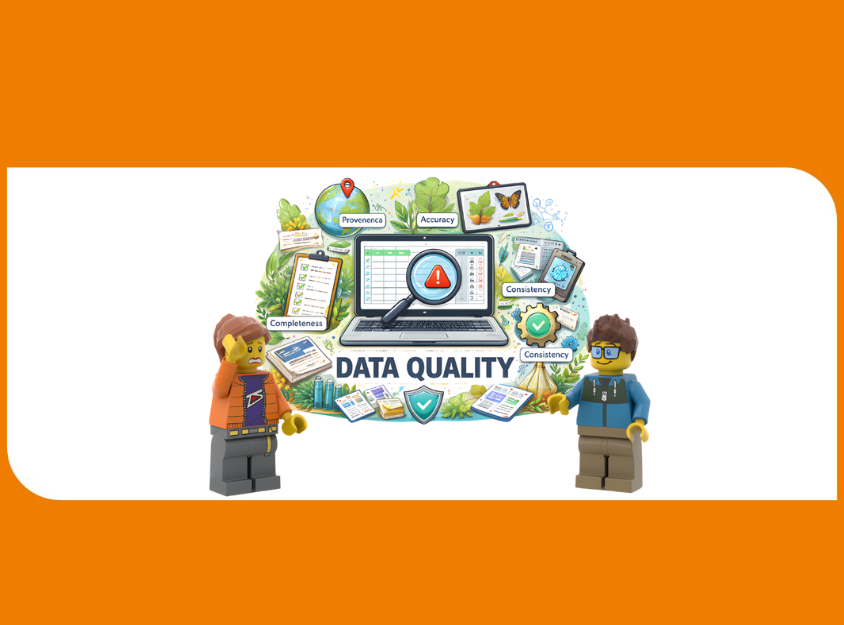
This course introduces the core dimensions of data quality in collection data, including accuracy, completeness, consistency, and provenance, and examines how they shape the reliability, usability, and reuse of data in research and curation. Learners will explore validation and integrity checks that support reproducible research, analyse common data quality problems using practical tools and workflows, and develop the ability to assess whether datasets are fit for purpose and how their quality can be monitored and improved.
Estimated time: 1.5 hours.
Level: Intermediate
Suitable for researchers and professionals with a solid knowledge of basic Research Data Management
- Manager, Course creator: Maureen Fonji Atemkeng
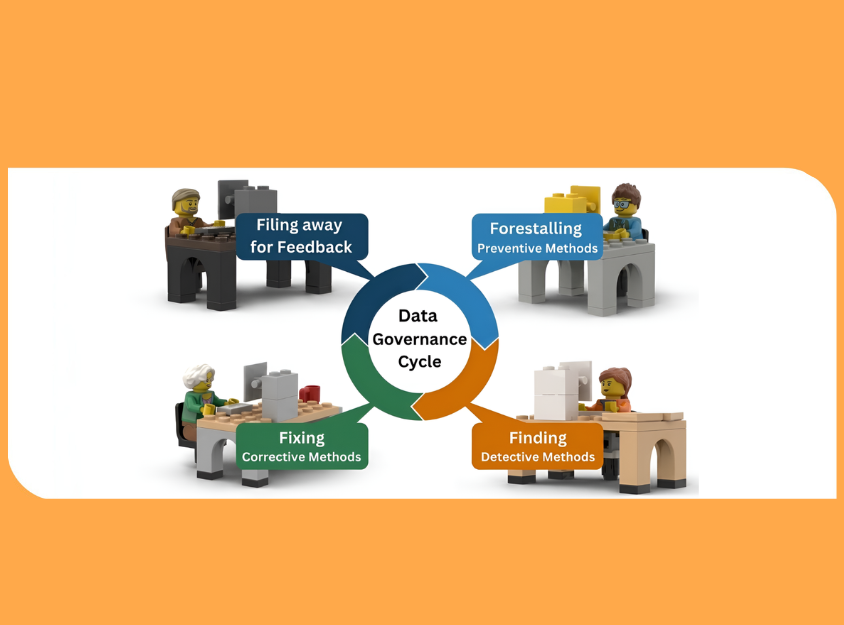
This self-paced online course introduces participants to the benefits of (institutional) data governance concepts for monitoring data quality. The focus is on operational techniques for detecting and preventing issues, e.g. automated checks, manual review with checklists, and rule‑based validation. Participants will learn how to design a lightweight monitoring approach.
Upon completion, participants should be able to understand the roles, tasks and workflows necessary for ensuring continuous improvement of data quality. They should know common tools and methods for monitoring data quality, analyse any detected issues, identify root courses and implement (semi-) automated measures to prevent repeat occurrences.
Estimated time: ca. 2 hours
Level: Intermediate
Suitable for researchers and professionals with a solid knowledge of basic Research Data Management who wish to systematise their approach for larger projects or institutional contexts.
- Manager, Course creator: Asta von Schröder

The online self-study course introduces the key international frameworks relevant to biodiversity research, genetic resources, specimen transport, and Indigenous knowledge and data governance.
Participants will learn the basic principles and practical implications of:
the Nagoya Protocol and Access and Benefit-Sharing (ABS),
CITES regulations for international transport of species and specimens,
the CARE Principles and UNDRIP in the context of Indigenous rights and data governance.
The course explains core concepts, common procedures, and practical research scenarios, including the use of relevant online resources such as the ABS Clearing-House and Species+ databases.
Upon completion of the course, participants should be able to identify which frameworks may apply to their own research projects, understand key compliance and ethical considerations, and navigate essential information resources independently.
Estimated time: 1 hour
Level: Basic
Suitable for beginners with little or no prior knowledge of international biodiversity frameworks, access and benefit-sharing regulations, or Indigenous data governance principles
- Manager, Course creator: Karolin Heinle